Friday, 30 April 2021

Three Key Points To Share Academic Progress with Families

During the pandemic, parents took on an essential role in virtual learning and became more engaged in the academic progress of their children.  As students return to the classroom, school leaders have the opportunity to keep this momentum going and partner with parents in monitoring student progress. Many parents appreciate the value of this increased involvement in their children’s education. However, they are looking for schools to make it easier to share academic progress with families. We’ve also heard in our Possip Pulse Check family trends that parents are asking to be updated more frequently. 


What can school leaders do both from a technology perspective and standardized approach to help keep parents engaged in the process? Here are three big tips for keeping families feeling updated:


1. Create & Share the Clear Grading Philosophy 


All schools should have a clear grading philosophy and share that with teachers, families, and students. Is it pure grading (i.e. a missing assignment) or is it contextualized and accounting for potential barriers (i.e. why this student is missing an assignment? Is it possible that they didn’t have technology or we didn’t set expectations or need? How your school grades and what grades mean will be essential to families feeling up-to-date with their student’s academic progress.


In addition to having your school’s grading philosophy clear to your community, give families information about who to go to if they have questions about their child’s grades, how their student can improve or change their grade, and ensure families understand the difference between grades and academic progress (if applicable). Families do not only want to clearly understand where their students are in terms of grades. They want to know if they are on-track comparatively to other students and if the curriculum is appropriately challenging By creating and sharing your school’s grading systems and philosophies, the clarity of grades will spark conversations about many other beneficial topics that lead to student success.


Here are a few Edutopia articles on grading philosophies if you want to read more on this topic: 


2. Standardize Communication & Grade Reporting Dates


One thing we hear often from parents is this teacher does this and this one does that.  It is hard to keep up with.   It is best for parents (and school leaders) if there are standard processes for notification of assignments and entering grades.  A few options here include:

  • Enter Grades at Beginning of the Week: Enter empty grades by Monday morning for the entire week.  This lets parents know exactly what the graded assignments are for the week.
  • Set a Date: Set a specific day each week for all missing assignments to be entered.  This works best if it is Friday. Then students can get caught up over the weekend when there are no new assignments. Having set dates keeps teachers, students, and families accountable to that norm. Additionally, set a specific day for all teacher to enter grades. When this happens consistently, families know when they need to follow up. They will also make sure their student is mastering the concepts.
  • Send Home Syllabi: Send home syllabus or curriculum expectations/calendar.  This can also include graded assignments. This can be done weekly or monthly, just depending on what works best and is reasonable for teachers.
  • Create Campus Communication Norms: Create and publish specific guidelines for when teachers will communicate with parents about student progress.  For example, if a student has a missing assignment, the teacher sends an email. If a student’s average falls below a  60%, the teacher calls the parent. Share these guidelines with parents so they are not wondering why or why not the school has not contacted them.
  • Clear Teacher Conference Metrics: Establish metrics for teacher initiated conferences. Families can trust that not wondering if they will need a conference.  The conference guidelines are available to families and encourage them to continue to follow progress using school based tools.  If a conference is needed, the parent is more prepared. It will also be easier to come up with a plan to improve student progress. 


3. Provide Tools & Resources for Families:


Families that have access to technology and updated grades will feel a lot more connected to their student’s academic progress. Here are a few tools to share with parents:

  • Access to Grades Online: Using online platforms is a great way to share academic progress with families. If your technology allows, parents should have access to report cards and progress reports or grade updates online. Make sure they know their log-ins and passwords. They should also have a campus contact if they have questions about the grade portal. 
  • Report Card Calendar: Have a set calendar for hard copy report cards and progress reports to be sent home. Make sure to share these dates with parents.
  • Instructions to Log-in to Grading Portal: Remind parents how to log-in to grade technology platforms to check when they need it–resend log-in info.  Create multiple forms of instruction including written and video and create translated versions as well.
  • Staff Directory: Keep an updated staff directory online and make sure all parents have teacher emails and require a 48 hour response time for teachers to respond to families.


Schools can provide resources to families and standardize processes to share academic progress with families. This will help parents and family members have greater clarity and build a strong partnership with teachers. 

The post Three Key Points To Share Academic Progress with Families appeared first on Possip | Parent Engagement Platform | School Feedback App.

The Power of Praise during Teacher Appreciation Week and Beyond

Caitlin Churchill, Possip‘s Experience and Support Team Lead, shares why she values praise, and how you can use teacher praise from Pulse Check reports for Teacher Appreciation Week.

Praise is powerful. It enables social capital, and more importantly, it is steam for self-esteem. It pushes us through wins and losses. Praise reminds us of our inherent value and visibility in this world. It says, “you are known, seen and appreciated!” I praise people behind their backs all the time! Call it positive gossip, if you will.

This Teacher Appreciation Week, you’ll have the opportunity to praise the educators around you, and we want to make it easy for you to do! There are thousands upon thousands of praise comments from parents that show up in Pulse Checks! Gain inspiration from the following praise quotes and check out these ways to use Possip praise for easy, yet meaningful Teacher Appreciation Week gifts!

This year, teachers have received wonderful shout-outs like:

*“Ms Snyder, Mr Quinn, Ms  Campos, Ms Sparks, Mr Wells, and Mr Watts have been extremely helpful with helping my granddaughter with her academic and social challenges. They are the role models, that can lead our children and other teachers in the right direction. Thank you guys.”

And praise for going above and beyond:

Me gustaría agradecer Mr. Olson….el se a tomadola molestia de ofrecerse a levantar a mi hijo está semana para que el pueda asistir a sus exámenes debido a que yo estoy trabajando y se me es difícil llevarlo, así que le estoy infinitamente agradecida.🎖🏆🎖👍” Which translated says, “I would like to thank Mr. Olson …. he has taken the trouble to offer to pick up my son this week so that he can attend his exams because I am working and it is difficult for me to take him, so I am infinitely grateful.

Parents have recounted really touching experiences:

I couldn’t love Ms. Lowe and Ms. Smith more. They are compassionate, creative, and responsive. This is my son’s first school and we were so apprehensive. We are so pleased with our decision to enroll every day.

And success stories:

I love the inclusivity of the school. It’s such an incredible place! My son recently decided he wants to be WRITER when he grows up. I attribute this to the amazing educators and humanities classes.

We’ve also seen praises about the growth students and families experience:

I also was so excited for my scholar to receive the nicest gift from the school for turning in all of his homework.  I cannot tell you how hard we have worked, even when my scholar didn’t want to.  Homework has taught us all so much because teaching a kindergartener 2 plus 1 isn’t really just a lesson in math.  I am facing myself at every level and gaining a tremendous amount of respect and appreciation for everyone who works in or supports schools.

It can be hard to know the impact you are making as an educator, but we have evidence of it through really kind and thoughtful praise quotes from parents. (For example, Possip partner Inglewood Elementary celebrates its teachers year round by using parent quotes from Pulse Checks). What better time to share those quotes with your team than Teacher Appreciation Week?

Get Teacher Praise Reports from Possip now, and let us know how we can make sharing praise really easy so your team knows they’re appreciated year round!

*Teacher names have been adjusted to maintain anonymity.

The post The Power of Praise during Teacher Appreciation Week and Beyond appeared first on Possip | Parent Engagement Platform | School Feedback App.

5 Tips to Help Support Students’ Academic Growth

During a traditional school year, educators work with students, teachers, and families to identify the best way(s) to support students’ academic growth throughout the school year. They also hope to mitigate the summer slide, “the degree to which students lose academic ground during the summer.”1

During COVID, it has become even more important to identify these methods to foster academic growth.

NWEA, a research-based not-for-profit organization that creates academic assessments, looked at how the summer slide can project a new type of slide: the COVID-19 slide. NWEA suggests that students will return with roughly 70% of the learning gains in reading and less than 50% of the learning gains in mathematics relative to a traditional school year, which may be equivalent to nearly a full year behind.1


At Possip, we have been hearing a trend that identifies family desires for academic support. 

  • “It would be great to have an ongoing list of tutors for the children that are struggling.”

  • “She is not giving feedback on wrong answers and my child feels like he is having to teach himself on YouTube videos.”
  • “Is there still a day where virtual students have to do their work and not attend class? Also, one teacher assigning 3 tests on a Friday in combination with 2 Spanish assignments is not appreciated.”
  • “My son has no math textbook or other online resources to consult if he doesn’t understand the material as taught by his teacher during (virtual) class time.”
  • “It would be nice if [teachers] could assign Khan Academy assignments related to [their] teachings every week, so each student can get extra help for each lesson.”
  • “All students are not the same. Each student has special learning needs. Especially students that have below or well above two standard deviations from normal… but basically his principal has said the district will not honor a change in status from in school to virtual”


Here are some tips on how to help support students’ academic growth:


Publish Tutoring Information

Schools can share tutoring information and make a one-on-one or small group academic support plan that is sustainable for teachers and helpful for students. If you are interested in diving deeper into what it could look like to create a tutoring program at your school, check out this blog from Possip to learn more about that process. 


If you already have a tutoring program at your school, publish the schedule in a variety of ways. This can be on social media, your website, newsletters, through Possip, etc. You can also clearly communicate the specific topics or objectives listed for tutoring sessions. This way students and families know what will be discussed and help inform if they should attend. This not only helps families, but also helps teachers understand what types of things can be covered during tutoring and can serve as clarity for their planning purposes. Additionally, it will increase the intentionality behind tutoring and allow students who really have that knowledge gap to get support. 


Tutoring doesn’t have to just be teacher-led, either! Encourage upper-grade students to create study groups to find a sense of community and a source of peer support!


Provide Frequent Student Feedback

Give students feedback regularly (daily if possible) using tangible checkpoints like high-quality homework, exams, and independent practice classwork. If you’re in person, try aggressive monitoring and send homework with feedback on it so families can see. Teachers can also create recordings to send home that go over questions/problems that can be posted after assignments are received. This is a great resource that students can use to understand why their answer was wrong and how to get the correct answer.


Coordinate Due Dates

Coordinate timing of assignment due dates to support student success. Consider a hub of information where teachers can see what is being assigned in other classes. Encourage students to reach out to teachers if they’re feeling overwhelmed. Teach them to advocate for themselves and discuss possible solutions such as deadline extensions. Schools can even plan study hall time that would allow students a dedicated space to begin their work and get support as needed. 


Provide Supplemental Resources

Provide helpful resources such as Khan Academy, IXL, BrainPOP, NearPod, and MobyMax. These resources are not only helpful for students, but also helpful for families to use at home to reinforce learnings and have meaningful conversations about what is being taught at school.


Ask Students

Ask students what would help with their academic growth! Teaching students to self monitor their understanding and advocate for what they need is an important life skill. Teachers and schools can go straight to the source and check-in on what would best support each student. Schools can give out student surveys in class and see what they need. They can even send out a Possip text that uses a bonus question to gather this data. Students hold a lot of the answers to our big questions as educators. Make sure to utilize their thoughts and insights to meet their own needs.


1 Kuhfeld, Dr. Megan, and Dr. Beth Tarasawa. “The COVID-19 Slide: What Summer Learning Loss Can Tell Us about the Potential Impact of School Closures on Student Academic Achievement .” NWEA, Apr. 2020, www.nwea.org/content/uploads/2020/05/Collaborative-Brief_Covid19-Slide-APR20.pdf.


academic growth opportunities

The post 5 Tips to Help Support Students’ Academic Growth appeared first on Possip | Parent Engagement Platform | School Feedback App.

Thursday, 29 April 2021

Family Trends from April 19th Through April 26th

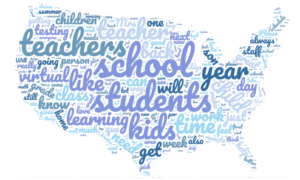
Almost 8,000 responses were submitted by parents, family members, and caregivers to a pulse check with their praise and insights throughout the week of April 19th through April 26th. If you are a family who receives Possip Pulse Checks, you may have heard back about trends from your specific school. It’s important to know what families are saying in your own community, but we also see it as a powerful tool to know what family trends are coming up across the nation. Possip has schools in 26 States and we want to share our findings from families. Keep reading to hear an overview of family praise and insights from across the country.


Last week, 79% of families responded that they were happy with their child’s school, with the remaining saying they were mostly happy or not happy with their child’s school.


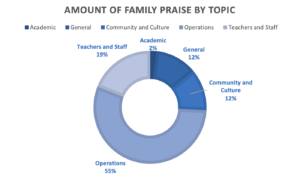
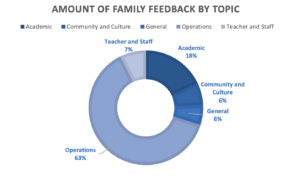
Here are the overall breakdowns of what families were talking about in their feedback and praise this week:


The most talked about topic for families this week was in the operations bucket, which consists of things like school schedules, transportation needs, carline logistics, school wide communications, technology, COVID safety measures, attendance, etc.

We saw a few positive trends from families across the country:


  • 17% of all Possip comments this week referred to teacher appreciation! We are continuing to see this as a trend throughout the school year and even more now that Teacher Appreciation Week is right around the corner. Parents mentioned how caring, patient, flexible, and supportive teachers have been this year. 
  • Praise for creative COVID safe changes for schools returning to in-person learning. Outdoor cafeterias, ways to make students feel connected while still being socially distant, and overall smooth reopenings.

Getting more granular with the feedback trends, here are the most frequently discussed feedback for schools across the country:

  • 7% of all Possip recommendations from families this week referred to feedback, ideas, and thoughts about COVID safety measures during in-person learning. Here are a few representative quotes from families on this topic:
    • “Greater consistency and clearer Information regarding Covid protocol and testing would help”
    • “My child came home early last week due to a sports related injury. We kept the student home the following day but were subsequently enrolled in COVID protocol due to the absence. “
    • “Need consequences for unmasking repeatedly”
    • “No masks at recess.”
  • 5% of all Possip recommendations to schools revolved around requests for more communication to families. Schools can specifically focus on communicating to virtual families and communicating about grades and academic progress frequently. Here are a few representative quotes from families on this topic:
    • “Advanced notice for meetings and discussions.”
    • “I haven’t heard anything from my son’s teachers. Really disappointed:
    • “There is very little to no communication with remote students… I think my son missed his testing”
  • 4% of all Possip recommendations to schools were around questions and comments about summer school programming. Families wanted options for remote learning over the summer and mostly wanted to know more logistics and clear information about what schools/districts are offering.
    • “Summer school is needed for remote students as well”
    • “Do my children still need to attend summer school in June?”
    • “Will there be a summer program for k-6?”
    • “What are the options for summer school?”

Here are a few suggested parent tools and resources based on what we are hearing.

We also shared these resources with our partner schools:

We’d love to hear from you. What else do you want to need or see? Do these parent praise and insights align with what you see?

The post Family Trends from April 19th Through April 26th appeared first on Possip | Parent Engagement Platform | School Feedback App.

Tuesday, 27 April 2021

Possip Spotlight: Waverly Belmont’s Equitable & Fun Family Engagement

We talked to Codi Cummings, 1st Grade Teacher at Possip Partner School, Waverly Belmont, and leader of their Parental Involvement Committee, about the creative ways they practiced equitable family engagement for their Family Game Night event.

Waverly Belmont (WB), which is an elementary school in Metro Nashville Public Schools (MNPS), takes parent and family engagement to the next level.

When Codi Cummings got approval from WB’s leadership team to start a Parental Involvement Committee, she intentionally set out to create a committee that represented the student and parent body. To do this, Codi contacted guidance counselors, social workers, local community partners, and others to ensure that any parent, educator, or community member who wants to be a part of the committee has an opportunity.

Family Game Night

The committee’s event planning efforts have been just as intentional as its formation. To plan a Family Game Night, the parents and community members on the Committee answered key questions. What would make you feel most comfortable? Welcome? Involved? What do you need as a family? Codi said, “We were asking families for so much, so we wanted to ask them: what can we do that makes you happy and involved in our school?”

They partnered with WB’s librarians (Laura Hartley & Katie Barksdale) to host the event during MNPS’ “Read Me” week. The librarians developed a theme for the week that included a very inclusive message focusing on the children’s book Dreamers by Yuyi Morales. “We were happy to make our event fit into the week celebrating dreams, hope, and love,” said Codi. The book, along with the activities to go with the book, bridged the Family Game Night Event and Read Me Week. In late March, MNPS hosted author Yuyi Morales for an author’s spotlight, which WB students viewed at school.

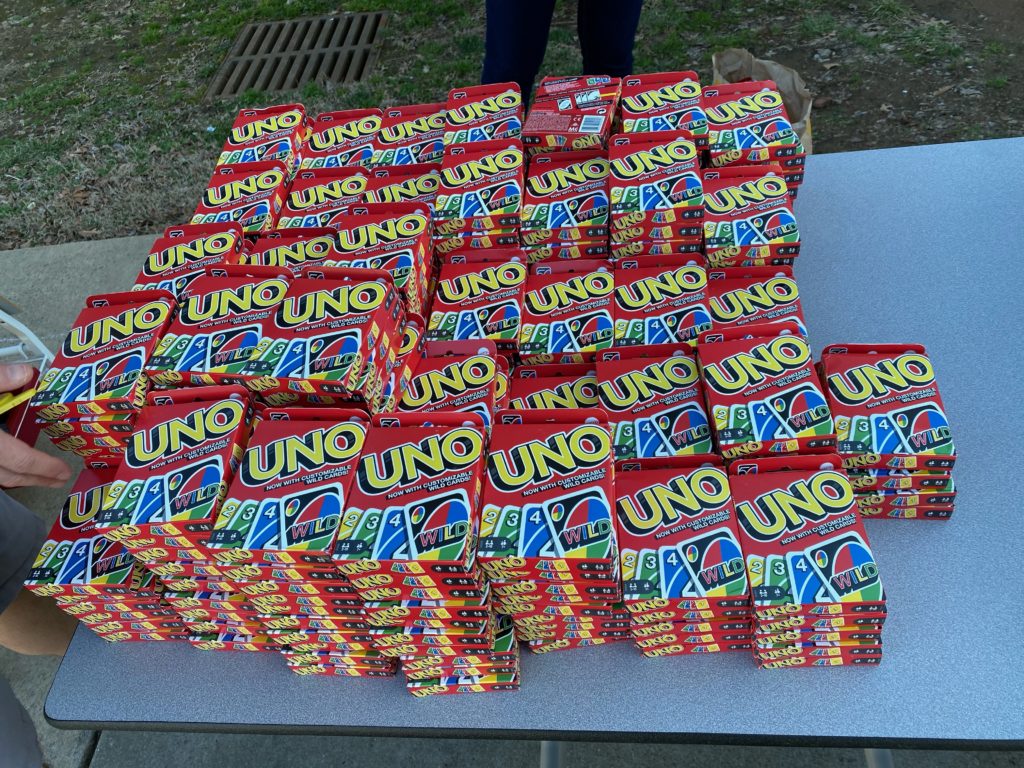
On Family Game Night, families came to school to take home a free meal, a pack of Uno cards, and a free copy of Dreamers. Teachers and the WB mascot greeted parents and families, and by the end of the night, 250 families were served. 50 extra pizzas went to the Nashville Rescue Mission.

What made the event a success? Equitable Family Engagement.

To make the event equitable for working parents, families who live far away, or families without transportation, the WB team of volunteers went doorstep-to-doorstep. Car or no car, families were involved in the event, and larger families could get three pizzas instead of one.

“We were actively listening to what our families wanted from us… We were just saying ‘we love you, appreciate you and support you,'” said Codi. “But, it was also successful because it was such an equitable event. Having a high number of families and a diverse number of families at events hasn’t always been the case.”


Ready to host a similar event for your school community? Here’s Codi’s advice:

1. Make sure that you have a committee or a group of people that is truly representative of your population.

If you’re trying to design a community event and don’t have parents involved, it won’t give you a good picture of what time parents will come and what they will be willing to do. Our committee enabled us to ask parents across a wide range of populations. We’ve done events in the past, but hadn’t provided transportation options. We wanted to make sure everyone could participate. This was the biggest piece for us, and will still be moving forward. When planning an event for a wide population, you have to have as many people involved from all different walks of life and all different parts of the community.

2. Ask questions.

What kind of event will it be? What days would you like to come? Is it helpful to get a meal? Would you be able to sit at home and play a great game? All of the plans we developed where centered around committee and parent responses.

3. Be intentional.

The smiles on everybody’s faces were great to see! The turnout can be attributed to the intentionality of the accessibility. We asked teachers to call their parents to tell them we really want them to be involved! We let them know we would bring pizzas to grandma’s house. Anybody that we didn’t get signed up through that process, we sent materials and free items home to.

4. Ask parents how they want to communicate.

If you can’t be at a zoom meeting. Do you want me to text? Email? Talking through all of those things reminded me that people want to participate, but some do not have the ability to be at their kid’s schools. Waverly Belmont is 50% down the middle in every category, so we have a really great opportunity to ensure everyone equally contributes. Everybody was willing to make that happen and it was important to have somebody say we’re going to have everybody involved.

5. Use social media.

Our hashtags were #wbgamenight and #wbfamilynight.

Thanks Codi for the spotlight and a great example of equitable family engagement! Click to learn more about Waverly Belmont, Metro Nashville Public Schools, and read more Possip spotlights.

The post Possip Spotlight: Waverly Belmont’s Equitable & Fun Family Engagement appeared first on Possip | Parent Engagement Platform | School Feedback App.

10 Ways to Use Possip Praise Quotes During Teacher Appreciation Week

Teacher Appreciation Week this year is May 3-7! As a former principal, it truly is the “most wonderful time of year,” in my humble opinion. At Possip, we have been sending our partner schools hundreds of specific teacher shout-outs and praise every week! Those words of affirmation from families are some of the most meaningful and sweet teacher appreciation gifts possible. So, what can schools do with Possip praise quotes from families? Glad you asked! We have some ideas to share! Even if you’re not a Possip partner school, you can use shout-outs or praise comments you gather from students and families during Teacher Appreciation Week. Here are 10 creative ways to use family praise for Teacher Appreciation Week:

Teacher Appreciation Posters: 

Decorate posters with praise quotes and hang them on each teacher’s door on the Monday of Teacher Appreciation Week. What a fun surprise when they go to unlock their door! Students can help make the posters secretly the week before and just copy the Possip quotes from family members. They will love helping out and can add some fun creativity to the posters! Plus, teachers love getting student-made art for Teacher Appreciation Week–it’s a win-win! 

Teacher Praise Bulletin Boards: 

Try putting together a bulletin board in the break room of all the positive and kind words from families! It’s as simple as printing off strips of all the Possip praise quotes and pasting them in a public space, like the teacher’s lounge. Families would love to help out with this if they are allowed on campus, or can even do most of the printing/cutting outside of school and drop it off at the front desk with set-up instructions. Just make sure for any of these public displays of teacher appreciation, that praise is balanced and that all teachers are recognized 🙂 

Positive Emails: 

Although simple, it’s a nice treat for teachers to find a positive email from their school leader in their inbox! You can send Possip teacher praise quotes in an email to individual teachers randomly throughout the day, or even have a special “Teacher Appreciation Week” staff newsletter that has all the Possip praise for a more public appreciation.

Praise Print-Outs: 

Another quick and simple way to use Possip teacher praise quotes is to copy them into a word document, print the quotes on decorative sheets of paper, and hand them out to teachers during morning arrival. This is super convenient if you already make morning rounds around the building. Starting off their day with tangible words of affirmations and positivity will be a great addition to Teacher Appreciation Week celebrations. It also wouldn’t be a bad idea to add a breakfast treat with the slip of paper! (What teacher wouldn’t love donuts or pastries from their leadership team in the morning?!).

Two other ways schools can use praise print-outs are:

  1. Cutting them and using them as raffle tickets in a meeting. Each teacher should have one praise quote in the “pot” and you can read a praise aloud for the winner.
  2. Print them out and randomly hang them around teacher spaces during the year (bathroom mirrors, coffee pot, next to the teacher lounge door handles, etc).

Virtual Slideshow of Praise:

If technology fits your comfort zone more than crafting, turn the praise quotes from families into a slideshow powerpoint or iMovie. The slideshow could be running at the start of a staff meeting, morning huddle, or in the break room. You can even send it to staff after the meeting, so they can keep it as a sweet “virtual” reminder of 2021 Teacher Appreciation Week.

Framed Quotes:

Teacher desks are great places to house reminders of teacher appreciation– they can be visual pick-me-ups. Handwrite or print praise quotes on decorative paper. Find a nice frame and cut the praise quotes to fit. This is an easy, memorable, and charming gift for Teacher Appreciation Week.

E-Cards to Teachers: 

It may be fun to go beyond the normal e-mail message this year. Put fun teacher praise quotes into a more celebratory “e-card” for each individual teacher. The inside of the card can be filled with individual praises or general praise for the staff. There are lots of e-card websites, like American Greeting Cards, with really fun, creative, and free cards.

Outdoor Chalk Talk: 

This one is dependent on the weather and your building layout, but if you have a singular teacher entrance, writing teacher praise quotes on the chalk at the school entrance is a fun way to start out the day. Teachers can enter school with extra “pep” after reading some kind words about them. 

Surprise Whiteboard Praise: 

Some teachers are very particular about their whiteboard cleanliness level and go to great lengths to keep it spotless, so if that’s true of your teachers, this idea may not be great. But if you haven’t noticed that clean “whiteboard” focus, it would be a fun surprise to pop into a teacher’s classroom early in the morning before they arrive and write praise quotes on their whiteboard. And don’t forget, leaving a donut or breakfast taco on their desk wouldn’t be a bad addition to the written praise!

Personalized Gifts with Praises: 

If you have a crafty side, get blank pottery or coffee cups and decorate them with praise quotes. Teachers can leave it on their desk for decoration or use the coffee cup frequently. 

There are endless ways to appreciate a teacher and sometimes the most simple words from families are the most memorable. Reach out to amanda@possip.com if you want more ideas for celebrating teachers this year or read this Possip blog on building staff culture for more ideas on how to celebrate your team throughout the year.

The post 10 Ways to Use Possip Praise Quotes During Teacher Appreciation Week appeared first on Possip | Parent Engagement Platform | School Feedback App.

Monday, 26 April 2021

5 Tips for School Leaders To Emotionally Support Students Returning to School

For the last year we have become adept at changes, going with the flow, and figuring out what we can do differently to adjust to new expectations. After a year of challenges and making adjustments, many people are preparing for another change: returning to on campus learning. This change may be met with excitement about returning to normality, apprehension of what adjustments need to still be made, anxiety for the health and safety of loved ones, and hope that things will continue to move forward.

Change is hard, knowing how to emotionally support students through change can make it a little easier.


Here are some tips for school leaders to emotionally support students returning to campus:


1. Communicate

The saying knowledge is power is true, but knowledge also holds the power of comfort. For many people, the more information they have, the better equipped they feel to take on something difficult or unknown. Communicate with families what procedures will be in place, the expectations of staff and students, and plans for exposure.

Allow for enough information to give students an idea of what the day to day will look like. Consider creating a video that shows what entry to school will look like, how classrooms are set up, how lunch will run, and what dismissal will look like.

Provide information that indicates what expectations students and staff are required to maintain for safety purposes and how individuals will be held accountable. Be detailed in the expectations so that there are no surprises for individuals when things come up.

Share with families the plans for exposure. Again, be detailed and provide as much information as you can so that families and students will know what to expect in the event of exposure.

Here are our 6 Tips on How to Communicate So Parents Listen and Hear.


2. Practice

Consider allowing parents whose students are very anxious to return to visit campus to practice what the day will look like. Exposure to campus in a controlled setting may help ease nerves and allow the student to plan what their day will look like. 


3. Listen

Allow students a space to figure out what they are experiencing by listening to what they have to say. Often when students verbalize how they are feeling and let it out, it can be helpful to process feelings and identify why and what they feel. Empathize with what they are saying and reflect to them what you are hearing.  Sentence stems such as “It sounds like you’re feeling __ because __” and “What I’m hearing is that you’re __ because __” are useful in showing that you are listening and helping students gain vocabulary to identify their feelings.


4. Use Tools

An important step after labeling and expressing an emotion is to identify if the student is okay with the emotion they’re experiencing, or if it would be beneficial for them to use a regulating tool to cope with the feeling or even move slightly into another feeling. Below are some tools:


  • 5-4-3-2-1 – Using descriptive full sentences
    • Acknowledge FIVE things you see around you. … “I see the falling brown leaves from the tree”
    •  Acknowledge FOUR things you can touch around you. … “I can feel the scratchiness of my wool sweater”
    • Acknowledge THREE things you hear. … “I can hear the hum of the heater warming the house”
    • Acknowledge TWO things you can smell. … “I can smell the pine candle I lit”
    • Acknowledge ONE thing you can taste. … “I can taste the hot chocolate I drank”
  • Breathing Exercises
    • Deep breath – in through nose, slow exhale through mouth.
    • Box breathing – inhale for 5 seconds, hold for 5 seconds, exhale for 5 seconds, hold for 5 seconds.
  • Encourage students to journal their thoughts when they are feeling overwhelmed or anxious
  • Guided Meditation – apps like MyLife offer a variety of guided meditations that can be selected based on how the individual is feeling


5. Refer

If you recognize that a student needs more support or is continuously anxious day after day, make a referral to the counselor.

E

The post 5 Tips for School Leaders To Emotionally Support Students Returning to School appeared first on Possip | Parent Engagement Platform | School Feedback App.